
AI and Ethics

Trump frames unregulated AI as a way to keep ahead...
An unregulated sector has risks in itself but will also aid the rapid advancement of AI in China.
 2 days ago
1
2 days ago
1

Quantum computing’s “dark horse” just proved it ca...
Researchers have shown that exotic quantum particles called non-Abelian anyons can perform the full range of operations needed for universal quantum computing. Using 54 qubits on Quantinuum’s H2 processor, they combined braiding and fusion to unlock capabilities that braiding...
 2 days ago
1
2 days ago
1
MIT’s tiny flying robot gets 450% faster with AI
A new AI control system lets MIT’s tiny flying robot move with insect-like agility, boosting its speed by about 450 percent and allowing it to pull off 10 somersaults in 11 seconds. The technology could eventually enable miniature robots...
5 days ago
6
The AI Ethics Brief #199: The Capacity to Govern
On open weights for everyone else, credit for a disputed mathematics proof, and control over autonomous weapons. Source
 1 week ago
10
1 week ago
10
The shape behind the Einstein problem just reveale...
A mathematical shape famous for covering a surface without ever repeating has revealed an unexpected ability to twist light into unusual chiral patterns. The discovery could lead to new ways of controlling light, polarization, and advanced optical devices.
1 week ago
7
AI Policy Corner: AI Policy Corner: The UN and the...
✍️By Ahmet Ergurum Ahmet is a PhD candidate in Political Science at the University of Wisconsin-Milwaukee, as well as a Graduate Affiliate at the Governance and Responsible AI Lab (GRAIL) at Purdue University. 📌 Editor’s Note: This article is part of...
1 week ago
8
AI Policy Corner: The UN and the Future of Militar...
✍️By Ahmet Ergurum Ahmet is a PhD candidate in Political Science at the University of Wisconsin-Milwaukee, as well as a Graduate Affiliate at the Governance and Responsible AI Lab (GRAIL) at Purdue University. 📌 Editor’s Note: This article is part of...
1 week ago
8
AI uncovers hidden Ozempic side effects across 400...
AI analysis of 400,000 Reddit posts found that users of drugs such as Ozempic, Wegovy, Mounjaro, and Zepbound reported unexpected symptoms including menstrual changes, chills, hot flashes, and fatigue. Researchers cannot say the medications caused these problems, but the...
2 weeks ago
10
Tiny nanolaser could cut computer energy use in ha...
Scientists have created an ultra-small nanolaser that could eventually allow microchips to transmit information with light instead of electricity, potentially making computers faster while cutting energy use roughly in half. Thousands of the lasers could fit on a single...
2 weeks ago
11
Scientists just made quantum computer operations 1...
Researchers have found a way to perform certain quantum operations more than 1,000 times faster, cutting thousands of repeated control cycles down to just one. The advance could reduce errors and bring reliable, fault-tolerant quantum computers closer to reality.
2 weeks ago
8
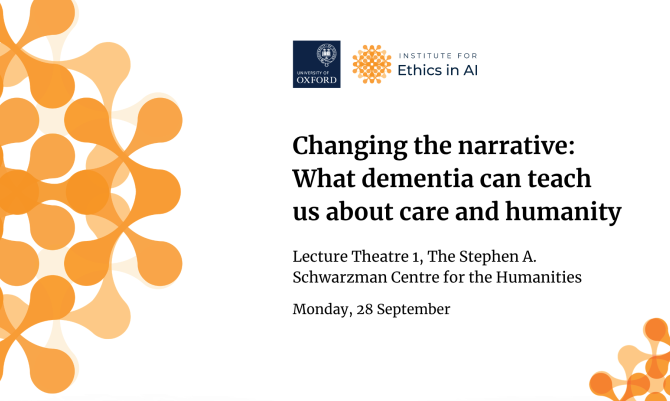
Changing the narrative: What dementia can teach us...
Changing the narrative: What dementia can teach us about care and humanity Ivanna Zghurska 02/09/2026 - 10:42 Changing the narrative: What dementia can teach us about care and humanity We are pleased to welcome Teun Toebes, International Care Innovator,...
 3 weeks ago
3
3 weeks ago
3

Canada’s AI strategy needs educators who feel prep...
A survey and workshop project is designed to help educators reflect on their comfort with genAI, assessment and educational practices and their fears and challenges.
1 month ago
8
AIxEd Leadership Summit – May 8, 2026
Keynote by Cansu Canca: Where is Responsible AI in Higher Ed?Premier full-day gathering of K-12, higher-Ed educators and Ed-tech professionals. Hear from leaders representing government, industry, and academia on the future of learning, workforce transformation, and strategic implications of...
 5 months ago
8
5 months ago
8

100% Unemployment is Inevitable*
As AI rapidly reshapes white-collar work, early data already shows rising unemployment in the most exposed industries, raising the provocative question of whether certain knowledge-worker roles are ultimately destined for 100 percent automation as AI accelerates toward AGI.
 10 months ago
8
10 months ago
8
TikTok Talks: The Future of AI in Social Media Voi...
Join us in this episode of "Eye on AI" as we dive into the latest advancements shaping the digital content world. Discover how a leading social media platform is pushing the boundaries of user interaction through groundbreaking AI technology....
 2 years ago
6
2 years ago
6
Popular






 English (US) ·